Executive Summary
- Theft of equipment from telecommunications towers is the most common threat faced, with cables and batteries popular components to steal.
- Insider threats do occur, with employees and sub-contractors directly or indirectly involved in the thefts of components from towers.
- Organised crime groups also pose a significant threat, with their ability to cause significant material and economic damage through creating their own networks and other acts.
Brazil’s threat environment is most often viewed through the activities of the primary criminal organisations operating in the country, particularly linked to drug trafficking. However, like in many countries, criminal groups in Brazil have diverse criminal enterprises, which not only encapsulates drug related crime and violence, but also extortion, armed robbery, agricultural trafficking, in addition to crimes against telecommunications infrastructure.
Like in neighbouring countries, telecommunications infrastructure targeted includes fibre optic cables, copper-based telecommunications cables, as well as telecommunications towers. The motivation for targeting such infrastructure includes the extraction of raw materials such as copper to to sell to scrap dealers, the resale of the stolen equipment, or the destruction of the infrastructure as part of wider criminal activities or to hamper law enforcement in targeting them. The location of some of the infrastructure, such as telecommunications towers, can be in quite rural environments, making it a soft target for criminals and organised criminal groups due to a lack of security. The activities of criminals towards the infrastructure have widespread impacts on individuals, but also businesses and the wider economy.
This report will serve as a brief overview of the various crimes targeting telecommunications towers, an important piece of infrastructure as the country continues its roll out of 5G.
Threats to Telecommunications Antennas
Brazil, like many other countries, sees its telecommunications infrastructure targeted by criminal elements, whether fibre optic cables, copper-based telecommunications cables, or its telecommunications towers. The infrastructure allows essential services that people rely on everyday to function properly, and the actions of criminals have widespread economic repercussions when the decision is made to target such infrastructure and disrupting phone and internet services. The motivation for the thefts or attacks against the infrastructure can vary, from extracting equipment for resale, extracting raw materials like copper to sell to scrap dealers, or destroying the infrastructure as part of a wider criminal activity or motivation. Additionally, the location of this infrastructure, can sometimes be in quite rural environments, making it a soft target for criminals and groups due to the lack of security.
Theft and Vandalism
The theft and vandalism from and of telecommunications towers continues to have a detrimental impact on the mobile networks of operators in Brazil. Thieves are often after valuable components like copper wiring, batteries, and other equipment that can be repurposed or sold for scrap. Incidents of batteries from telecommunications towers is not unique to Brazil, and a large number of incidents have been reported in countries like South Africa. The theft of power supply cables to telecommunications towers is also a common trend in Brazil, likely for the metallic components inside the cables. The thefts and acts of vandalism have been conducted by independent criminals, by organised crime groups, as well with the support of employees of the very companies they are stealing from.
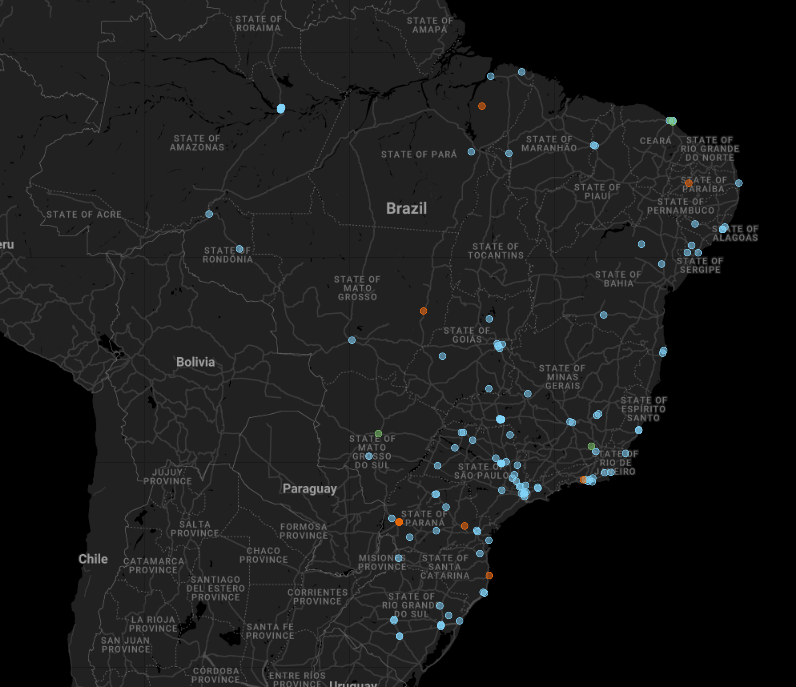
Picture: Incidents of theft (blue), vandalism (orange), and arson (green), targeting telecommunications towers in Brazil.
Threats By and Against Employees
Incidents of employees of telecommunications companies participating in the theft of equipment from telecommunications towers have been reported over time in Brazil. In June 2024, a technician for a company contracted by a phone operator was arrested with stolen equipment in Caucaia after stealing from a tower in Paracuru. In April 2023, police arrested four suspects for stealing batteries from a tower, with one suspect saying that a tower installation technician had provided padlock codes for the gate around the tower, as well as coded keys to the base station cabinet, and the location of the company’s towers.
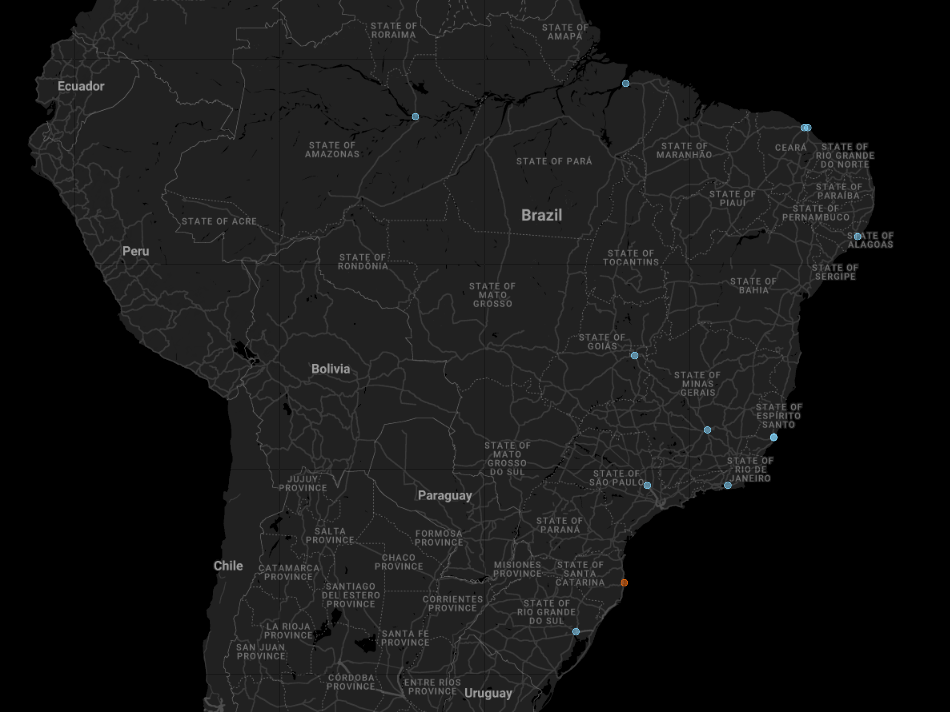
Incidents of theft (blue), and vandalism (orange) involving current or former employees of telecommunications companies in Brazil.
While employees have been involved in criminal acts against towers, the threat to employees maintaining the towers is also present, particularly due to the remoteness of the locations they operate in. In October 2024, four employees of the Claro company were robbed while working on a tower along BR-364 in Porto Velho. The suspects stole the employees’ phones and fled the scene.
Organised Criminal Groups
While organised criminal groups such as the Primeiro Comando da Capital (PCC), the Comando Vermelho (CV), and militias are most known for their drug trafficking activities in the region and abroad, these groups have also been involved in other criminal enterprises, including taking over telecommunications towers. The threats and actions taken by organised criminal groups are at times for monetary gains, while during other times as a show of force and to increase influence in the areas they control.
In 2016, criminals threatened to use explosives to destroy telecommunications towers in the state of Ceara if a bill to block mobile phone signals in prisons was not vetoed. The criminals threatened telecommunications operators to not adhere to the state government’s plans to block the mobile phone signals in prisons or they would be targeted. In the same state, in March 2018, several telecommunications towers were set on fire in Fortaleza after operators installed mobile phone signal jammers in prisons. In 2019, again in Fortaleza, significant unrest took place in the city and the wider state after the state government took further actions to combat criminal activity in prisons. Heads of gangs in prisons called on members of their gangs outside the prison to conduct acts that saw vehicles, power lines, buildings, and telecommunications towers destroyed. The incidents show that motivations for the destruction of telecommunications assets does not necessarily have to be monetary in nature.
Organised criminal groups like the PCC and CV often control vast amounts of territory, particularly in urban centres like Rio de Janeiro, where they are able to run their various criminal enterprises. Some groups like militias have taken control of telephone and internet lines by cutting cables and forcing local residents to pay to use a clandestine internet service the militia has set up. Legitimate operators lose revenue and equipment, as they are often unable to recover equipment or restore service due to insecurity.
In other areas, criminal factions diligently control access to those areas through roadblocks and other means. There criminal factions block access to telecommunications workers who are then unable to conduct maintenance. Telecommunications tower may cease to work, and the criminals will extort telecommunications companies to allow workers to conduct the repairs. In 2021, dozens of towers were said to be under the control of criminal factions. With changing criminal territory boundaries, it is probable that a significant number of towers continue to be inaccessible to telecommunications operators. The targeting of telecommunications infrastructure by organised criminal groups impacts hundreds of thousands of people, and has a detrimental impact to communication itself and to any business or infrastructure requiring service.
Understanding the threats to the physical security of telecommunications is important for companies operating in-country, both local and foreign companies. With an average cost to build of USD 130,00-150,000 per tower in Brazil according to Dgtl Infra, telecommunications companies face a significant financial burden if trends targeting towers continue. The theft of power cables and batteries are likely to be the most common activities in the near future, and may fluctuate in frequency dependent on the price of raw materials and equipment for scrap or to be sold on the black market. However, the destruction or takeover of towers by organised criminal groups will remain a threat as groups see it as a rewarding criminal enterprise, as entire populations of residents use mobile and internet services, but only a fraction are drug users.
 Intelicom